
SAFETY ON THE WATER IN PACKRAFT
An article to help you travel more safely on the water in your packraft, canoe or kayak.
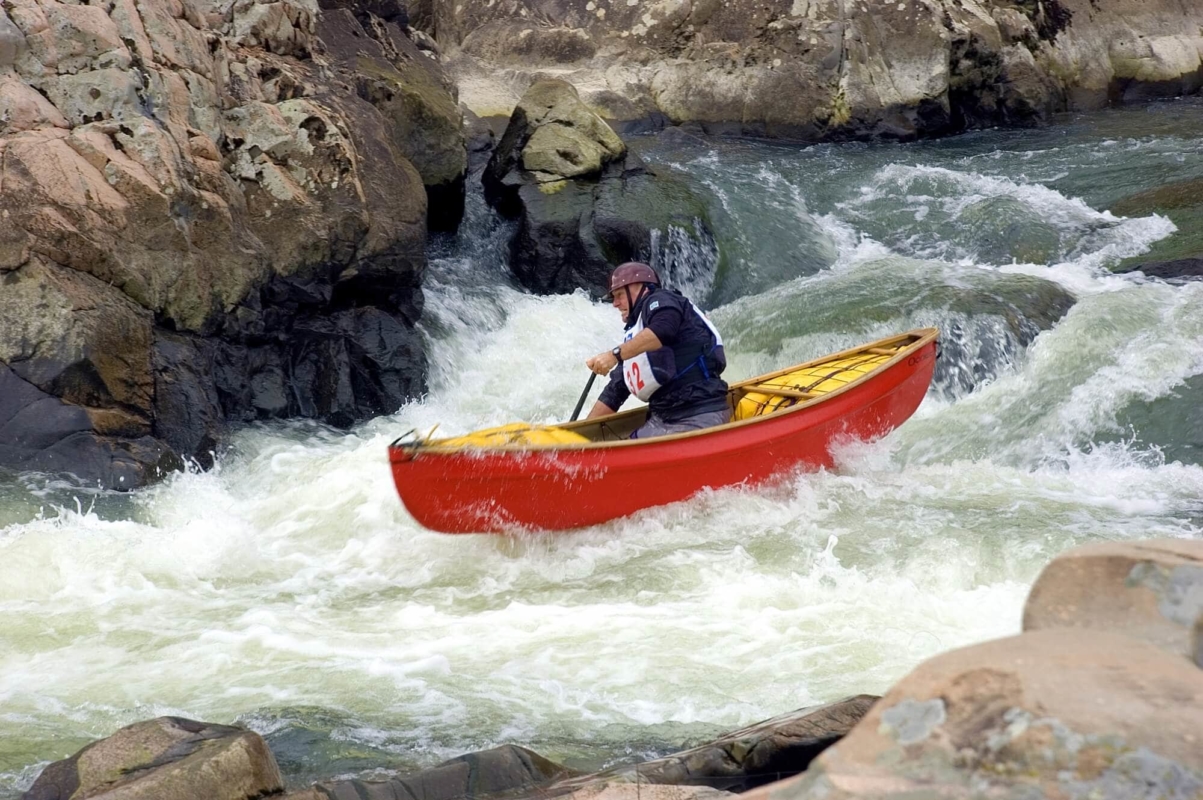
From a safety point of view, the following texts are the most basic that everyone involved in canoeing should know. Some items have one or more links attached to them, where you can read further and deepen your knowledge. The list ends with a collection of links for further reading.
- Learn how to get in and out of the boat on calm waters. Practice!
- Learn how to read the water. Start by reading 'The basics on how to read white water' and then continue with the article 'River hazards and how to survive them'. Be especially careful in places where you see fallen trees or tree trunks on the surface.
- Stay updated on the weather.
- Never paddle in rushing water on your own.
- Acquire knowledge about what awaits you downstream. Plan your trip in advance. Jump out of the packraft if you experience the slightest uncertainty and scout/shrimp from shore.
- Tell others about your trip, in advance. Post your route on Facebook for public viewing. Try not to deviate from a planned route.
- Carry an emergency transmitter, such as Spot or McMurdo fastfind 220.
- Wait for your turn. Let the most experienced paddler paddle first. The least experienced in the middle. Make sure to keep a safe distance between you.
- Equipment is essential. For whitewater paddling, you need a helmet, life jacket and preferably a dry suit. When paddling in cold water, you should definitely wear a dry suit. Other safety equipment includes a knife, whistle and a rescue line. Never use a paddle leash.
- Hug the rock! If you have made the mistake of paddling into/crashing into an immovable object, such as a large stone in the water, you should always lean your body weight into the object. Hence the expression "hug the rock". This needs to be practiced, as the natural reaction is to lean away from the object. If you lean away from the object, there is a high chance that water will wash over the rail and tip the boat over.
- Get out of the boat in case of emergency. In any situation, make sure to save yourself first. Your equipment is secondary. Drop the paddle if necessary and never tie yourself to the paddle or boat.
- "Clean boat". Make sure you have a clean boat. This means that you should try to minimize hanging straps, cords, bags, and other items on the boat and on yourself that you may risk getting caught or tangled in.
- Follow your instincts. Do you feel nervous, unsure or uncomfortable? Tell this to those you are paddling with. It's YOU who decides. It's not macho to paddle terrified down a rapids. Stop or walk on land if you don't feel comfortable.
The key to avoiding rocks is to look at where you want to go and not at the rock! If you do find yourself up against a rock defy your instincts and lean into the rock. By leaning into the rock you allow yourself to stabilize and the current will naturally push you around the rock. If you lean away from the rock you'll expose the upstream edge of your kayak to the current that will act on your boat to flip you over.
Further reading
- A series of articles on packraft paddling safety, by Mark Oates
- Packrafting Awareness Presentation by Monica Morin
- Luc Mehl's Keynote Presentation
- NRS safety and rescue series (11 excellent videos)
- Mark Oates: "10 things you need to know to paddle safe + strong"
- Luc Mehl's post on Class IV packrafting
- Animated tutorials for kayaking (can be applied to packraftin)
Executive summary
- Learn how to get in and out of the boat on calm waters and practice regularly.
- Keep informed about the weather and never paddle in rushing water on your own.
- Equipment is essential; wear a helmet, life jacket and carry an emergency beacon.
- Always prepare your route in advance and inform others of your plans.
- Follow your instinct; if you feel unsure, abort or go ashore.